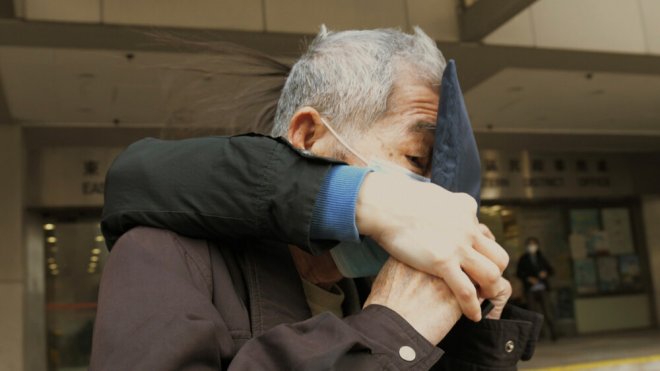
Bao Tong, aide to ousted top Chinese leader Zhao Ziyang, dies at 90
Bao Tong, a former aide to deposed Chinese leader Zhao Ziyang who spent years in jail and house arrest following the crushing of the 1989 Tiananmen Square protests, died Wednesday at the age of 90, his son said.The terse tweet from Beijing by Bao Pu, a Hong Kong-based independent publisher, said the elder Bao died early Wednesday morning, four days after his 90th birthday.
Bao Tong was thought to have been in the hospital in Beijing and did not appear in public for the funeral of his wife, Jiang Zongcao, who died of cancer on Aug. 21 at the age of 90.
Before the 1989 Tiananmen Square protests, Bao Tong worked as director of the Office of Political Reform of the Central Committee of the Chinese Communist Party.
A key ally of premier Zhao Ziyang, Bao served a seven-year jail term for "revealing state secrets and counter-revolutionary propagandizing."
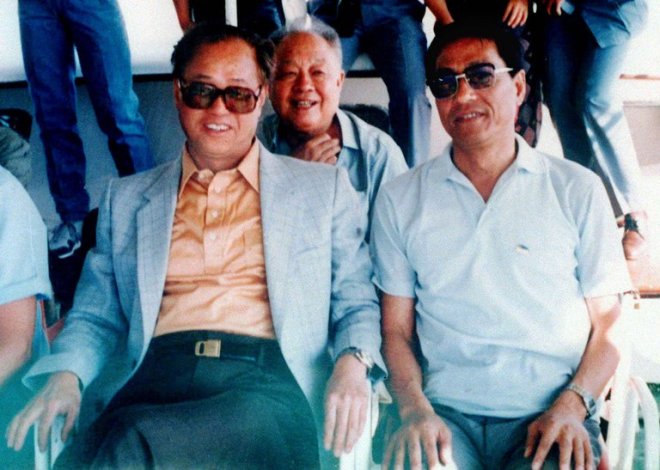 Bao Tong
 sits beside Zhao Ziyang
in this undated file photo. Credit: Associated Press
Zhao fell from power after late supreme leader Deng Xiaoping decided his line on the student protests was too conciliatory. He was later removed from office and spent the rest of his life under house arrest at his Beijing home, dying in early 2005 with his legacy largely erased from official history.
While under house arrest and other forms of close scrutiny, Bao Tong remained a trenchant critic of the Chinese Communist Party.
He was a prolific, long-time contributor of commentary on a wide range of Chinese and international issues for Radio Free Asia’s Mandarin service, although his output tapered off with declining eyesight and health in recent years.
In a June commentary on the publication of Premier Li Peng"s accounts of the events leading up to the June 4, 1989, bloodshed by the People"s Liberation Army, Bao tied the events that led to Zhao’s and his downfall 33 years earlier to the current situation in China under President Xi Jinping.
“The massacre helped to found the current ‘core system,’ in which everyone is expected to be of one mind, in the world"s most populous country,” wrote Bao Tong.
“The massacre paved the way for countless layers of CCP [Chinese Communist Party] control, from national government to the urban police, or chengguan, and the auxiliary police, to ordinary people and dissidents governed as ‘special households,’" and for the mantra "Follow the party and prosper: oppose it and die" to be encoded into the minds of all Chinese citizens, he added.
[圖擷取自網路,如有疑問請私訊]



Zhao fell from power after late supreme leader Deng Xiaoping decided his line on the student protests was too conciliatory. He was later removed from office and spent the rest of his life under house arrest at his Beijing home, dying in early 2005 with his legacy largely erased from official history.
While under house arrest and other forms of close scrutiny, Bao Tong remained a trenchant critic of the Chinese Communist Party.
He was a prolific, long-time contributor of commentary on a wide range of Chinese and international issues for Radio Free Asia’s Mandarin service, although his output tapered off with declining eyesight and health in recent years.
In a June commentary on the publication of Premier Li Peng"s accounts of the events leading up to the June 4, 1989, bloodshed by the People"s Liberation Army, Bao tied the events that led to Zhao’s and his downfall 33 years earlier to the current situation in China under President Xi Jinping.
“The massacre helped to found the current ‘core system,’ in which everyone is expected to be of one mind, in the world"s most populous country,” wrote Bao Tong.
“The massacre paved the way for countless layers of CCP [Chinese Communist Party] control, from national government to the urban police, or chengguan, and the auxiliary police, to ordinary people and dissidents governed as ‘special households,’" and for the mantra "Follow the party and prosper: oppose it and die" to be encoded into the minds of all Chinese citizens, he added.
[圖擷取自網路,如有疑問請私訊]
|
本篇 |
不想錯過? 請追蹤FB專頁! |
 | 喜歡這篇嗎?快分享吧! |
相關文章





AsianNewsCast